
The '2012 Seoul Nuclear Security Summit', which starts in Seoul today, is the largest summit in the nuclear security sector to discuss international cooperative measures to protect nuclear materials and facilities from terrorist groups. Srikanth Kondapalli, professor at Jawaharlal Nehru University, explains what to expect from two-day long deliberations at Seoul
'Pakistan has been successful in convincing the rest of the world that the Pakistani nuclear terrorists are meant to target only India. This is myopia at its worst,' says Colonel Anil A Athale (retd).
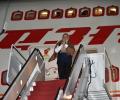
Attending the Nuclear Security Summit for the first time, Modi is expected to lay out his vision of securing nuclear weapons.
Prime Minister Manmohan Singh on Saturday left for a four-day visit to South Korea where he is expected to unveil steps conceived by India to tackle challenges of nuclear terrorism before 57 world leaders at the Nuclear Security Summit in Seoul.
Prime Minister Manmohan Singh leaves on Saturday on a four-day visit to South Korea where he will seek to strengthen ties with his Asian economic partner and also participate in the Nuclear Security Summit. During his visit to Seoul, Dr Singh is scheduled to hold talks with President Lee Myung-bak on Sunday to forge closer economic ties. This will be the second official visit by an Indian prime minister to South Korea after the visit of P V Narasimha Rao in 1993.

Informing the world leaders of measures taken by him, Modi said India will continue to accord a high national priority to nuclear security through strong institutional framework, independent regulatory agency and trained and specialised manpower.
Pakistan Prime Minister Nawaz Sharif on Monday cancelled his upcoming visit to the United States where he was scheduled to attend the Nuclear Security Summit.

India successfully facilitated a significant diplomatic meeting between Iranian President Masoud Pezeshkian and UAE Crown Prince Sheikh Khaled bin Mohamed bin Zayed Al Nahyan on the sidelines of the BRICS Summit in New Delhi. This interaction, a diplomatic breakthrough given ongoing West Asia conflicts, occurred as BRICS adopted a declaration urging restraint and protection of civilians in the region, highlighting the bloc's commitment to peace and stability.
Prime Minister Manmohan Singh is expected to visit the US in April to attend a global Summit on nuclear security, a topic that is of immense interest to India considering apprehensions over safety of atomic arsenal in Pakistan and proliferation originating from there.

Marco Rubio will visit Mumbai and Jamnagar to discuss energy cooperation as S Jaishankar says India-US trade talks are nearing a landing point, with a few issues unresolved.

Prime Minister Narendra Modi and Russian President Vladimir Putin held extensive discussions to strengthen bilateral trade, defence, and energy cooperation, while also addressing the ongoing Ukraine conflict and exploring avenues for peace and resolution, with Modi reiterating India's call for dialogue and diplomacy.

Iranian President Masoud Pezeshkian concluded his visit to India for the 18th BRICS Summit, announcing that Iran and the UAE agreed to move past previous tensions. This diplomatic breakthrough occurred during talks with Abu Dhabi's Crown Prince on the summit sidelines. Pezeshkian also met with PM Modi to discuss bilateral ties and West Asia developments, with Modi emphasising dialogue for regional peace. The BRICS summit adopted the New Delhi Declaration 2026, calling for global governance reforms and de-escalation in West Asia.

Prime Minister Narendra Modi, addressing the SCO summit in Bishkek, called for a united front against terrorism and its financing, rejecting double standards. He emphasised resolving conflicts through dialogue and diplomacy, not battlefields. Modi also highlighted that connectivity projects must respect national sovereignty and territorial integrity, a veiled reference to China's Belt and Road Initiative. India's vision for SCO rests on security, connectivity, and opportunity.

Pakistan, Saudi Arabia and Turkiye on Friday signed a key joint defence agreement under which an attack against one of them will be treated as an attack against all of them, amid increasing security concerns in the wake of escalating tensions in West Asia.

The US and Iran have agreed on a roadmap aimed at reaching a final agreement within 60 days after hours-long talks at the Swiss resort of Burgenstock, mediators Qatar and Pakistan said on Monday, describing the progress as "encouraging."

Prime Minister Manmohan Singh arrived in Washington on Sunday, on a four-day visit during which he will attend the Nuclear Security Summit on Monday and meet President Barack Obama and some other world leaders. At the Nuclear Summit to be attended by leaders of 46 other countries also, Singh is expected to pitch for firm response to the challenges of proliferation and possibility of terrorists gaining access to atomic material.

Over the years, India-EU ties have grown, and covered trade, investment, climate change, science and technology, space, digital, mobility, and connectivity.

India and Australia have signed significant agreements covering civil nuclear energy, maritime security, and critical minerals, reinforcing their partnership's role in ensuring a peaceful Indo-Pacific. The pacts facilitate uranium supply from Australia to India and enhance cooperation in defence, cyber, and critical technologies.

US President Donald Trump and Israeli Prime Minister Benjamin Netanyahu are reportedly planning a White House meeting as early as next week, despite growing scepticism within Trump's inner circle regarding Netanyahu's actions and widening disagreements over regional security and Iran.

US Vice-President J D Vance's unexpected phone call to Prime Minister Narendra Modi on August 8 has ignited speculation about a potential diplomatic overture, possibly seeking India's support amidst the escalating US-Iran conflict and a shifting global power landscape, suggests Ambassador M K Bhadrakumar.

Pakistan capital Islamabad is emerging as the leading venue for the next round of technical negotiations between the US and Iran, a media report said Sunday.

Earlier, Israeli Prime Minister Benjamin Netanyahu also declared that Iran would never be allowed to acquire nuclear weapons, regardless of any agreement.

India and Canada solidify their partnership with a landmark uranium supply agreement and discussions to finalise a comprehensive economic partnership, signaling stronger ties and cooperation on key global issues.
US President Barack Obama will host a two-day summit on nuclear security beginning April 12, during which key global leaders including Prime Minister Manmohan Singh are likely to get together to discuss ways to secure atomic material and prevent acts of nuclear terrorism.

Top leaders from the US, Iran, and Pakistan, along with other nations, have gathered in Switzerland for high-level talks aimed at restoring peace in West Asia. These negotiations follow a recently signed Memorandum of Understanding between the US and Iran, initiating a 60-day window for a deal. Discussions focus on Iran's nuclear programme and the fragile interim peace deal, amidst renewed tensions and the fluctuating status of the Strait of Hormuz.

'DRDO has been directed to license missile technologies to the private sector.'
Amid growing concerns of nuclear weapons falling into the hands of terrorists, Prime Minister Manmohan Singh will join leaders of 42 other countries in Washington on April 12 to discuss ways to strengthen the global initiatives to prevent such a scenario.The two-day Nuclear Security Summit, an initiative of US President Barack Obama, will focus on dangers posed by clandestine proliferation and illicit trafficking of nuclear material.

Tensions escalate between Iran and the US over control of the Strait of Hormuz, a crucial shipping lane for global oil supplies, as both sides discuss extending a fragile ceasefire.

'Actual implementation of the 14-point agreement is proving hard to achieve let alone striking and sustaining a long-term treaty or deal.'

A US-Iran memorandum of understanding is set to be signed, outlining sanctions relief, the reopening of the Strait of Hormuz, and a 60-day negotiation window for Iran's uranium enrichment, but US President Donald Trump has underscored the deal's conditional nature, warning of military action if Tehran fails to comply.
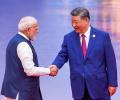
India's dual pursuit of a robust strategic partnership with Washington and a pragmatic, tension-management policy with Beijing represents the essence of modern multi-alignment. By embracing economic pragmatism, learning to compartmentalize political differences, and engaging in continuous dialogue, India can secure its borders, grow its economy, and contribute to a stable, multipolar Asian century, points out Ambassador Rajasekhar.
As Tehran and Washington continue with their engagements following the signing of the MoU earlier this month, sources have told Al Arabiya that the two are set to hold the next round of negotiations in Switzerland on June 28 and 29.

Donald Trump has issued a stern warning to Iran, stating that the US will take a tougher stance if a diplomatic resolution regarding its nuclear programme is not reached soon.

The harsh truth is that the US is no longer a reliable partner, cautions Ramesh Menon.

The United States and India are on the verge of finalising a landmark bilateral trade deal, aiming to boost trade to USD 500 billion by 2030, according to US Deputy Assistant Secretary of State Bethany Poulos Morrison. The agreement seeks to open India's 1.4 billion-strong market to American goods on reciprocal terms, with ongoing high-level discussions to recalibrate the pact after recent changes in US tariff policy.

US President Donald Trump concluded his Beijing summit with Chinese President Xi Jinping, describing it as 'incredible' and highlighting 'fantastic trade deals' and a 'very strong' relationship between the two leaders.
Prime Minister Manmohan Singh left Seoul for home on Tuesday after concluding a four-day visit, during which he attended the Nuclear Security Summit, held bilateral talks with the South Korean president and had informal discussions with his Pakistani counterpart Yusuf Raza Gilani. During his stay, India and South Korea agreed to step up political and security cooperation and vowed to double the bilateral trade to an ambitious $40 billion by 2015.

US President Donald Trump on Monday confirmed that a high-level American negotiating team, including Vice President JD Vance, Jared Kushner, and Special Envoy Steve Witkoff, is en route to Pakistan to initiate critical negotiations with the Iranian leadership.
Prime Minister Manmohan Singh and his Pakistani counterpart Yousuf Raza Gilani on Tuesday exchanged pleasantries, their second informal chat in two days at the Nuclear Security Summit in Seoul.

Chinese President Xi Jinping has arrived in Pyongyang for his first official visit in seven years, meeting with North Korean leader Kim Jong-un to reaffirm their long-standing friendship and pledge further development of bilateral relations amidst Pyongyang's deepening military ties with Moscow and China's assertions against Japan's 'new militarism'.
